Pre-1950 traditional record
Spirulina (Arthrospira platensis) is a cyanobacterium that has been harvested for human consumption for centuries. The earliest recorded use comes from the Aztecs in 16th-century Mexico, who collected a blue-green bloom from Lake Texcoco and dried it into cakes called tecuitlatl. The Spanish chronicler Bernardino de Sahagún described this practice in his Florentine Codex (circa 1577), noting that the cakes were eaten with maize or tortillas. Similarly, in the Kanem region of present-day Chad, the Kanembu people have traditionally harvested dihe from Lake Chad, sun-drying it into flat cakes used in sauces and broths. These traditional uses were documented by European explorers in the 19th century, but it was not until the 1940s that French phycologist Pierre Dangeard first identified the organism as a cyanobacterium and noted its high protein content. Despite this long history, spirulina remained a local food until the mid-20th century.
Soviet-era studies
The modern scientific interest in spirulina began in the 1960s, driven by the Soviet space programme. Researchers at the Institute of Biomedical Problems in Moscow sought a compact, nutrient-dense food source for cosmonauts on long-duration missions. Spirulina's ability to be grown in closed-loop systems with minimal resources made it an ideal candidate. In 1964, the Soviet Academy of Sciences initiated a series of studies to evaluate spirulina's nutritional composition and safety. Early work by Dr. G. V. Nikolaev and colleagues demonstrated that spirulina contained 60–70% protein by dry weight, along with essential fatty acids, vitamins, and minerals. In 1977, the Soviet Ministry of Health approved spirulina as a food supplement for cosmonauts, and it was included in the diet of crews aboard the Salyut and Mir space stations. These studies also investigated spirulina's potential to mitigate the effects of microgravity, such as immune suppression and oxidative stress. While the Soviet research was extensive, much of it was published in Russian and not widely disseminated in the West until later.
Western adoption
Spirulina entered Western markets in the late 1970s, initially as a health food for niche consumers. The first commercial spirulina farm was established in 1976 in Mexico by the Sosa Texcoco company, using the same Lake Texcoco waters where the Aztecs had harvested it. In the 1980s, spirulina gained popularity among athletes and natural health advocates, and by the 1990s, it was being studied for a range of therapeutic applications. A landmark clinical trial by Belay et al. (1993, PMID 8219310) in the Journal of Applied Phycology demonstrated that spirulina supplementation (4 g/day for 12 weeks) reduced total cholesterol and LDL cholesterol in hyperlipidemic patients. Subsequent research has explored spirulina's antioxidant, anti-inflammatory, and immune-modulating properties. For instance, Mazokopakis et al. (2014, PMID 24666912) in Nutrition Journal reported that spirulina (2 g/day for 6 months) improved lipid profiles and reduced oxidative stress markers in patients with type 2 diabetes. Despite these promising findings, many studies have been small or of short duration, and the European Food Safety Authority (EFSA) has not authorised any health claims for spirulina due to insufficient evidence.
Today's regulatory status
In the United Kingdom, spirulina is regulated as a food supplement under the Food Supplements (England) Regulations 2003, which implement EU Directive 2002/46/EC. It is not subject to novel food authorisation because it has a history of safe use prior to 1997. The UK Food Standards Agency (FSA) advises that spirulina is generally safe, but consumers should be aware of potential contaminants such as microcystins (toxins produced by other cyanobacteria) if the product is not properly cultivated. In the United States, the FDA classifies spirulina as a food colouring (21 CFR 73.530) and allows its use as a dietary ingredient. The European Commission has set maximum levels for heavy metals and microbiological contaminants in spirulina products under Regulation (EC) No 1881/2006. Despite its widespread use, spirulina is not approved for any medical indication by the European Medicines Agency (EMA) or the UK Medicines and Healthcare products Regulatory Agency (MHRA). It is considered a food, not a medicine, and any therapeutic claims are not permitted.
Dosage and quality considerations
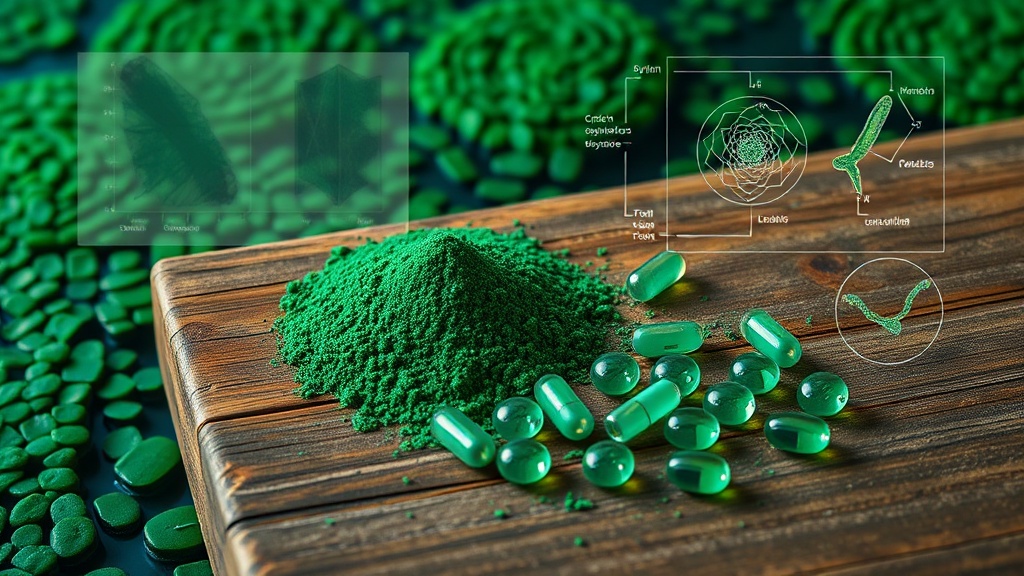
Based on clinical studies, typical dosages of spirulina range from 1 to 8 g per day, with most trials using 2–4 g/day. A common recommendation is 3 g/day, taken in divided doses with meals. Spirulina is available in tablet, capsule, or powder form. Tablets are often compressed from 100% spirulina powder, with a typical 500 mg tablet requiring 6 tablets to reach 3 g. Powder can be mixed into water, juice, or smoothies. The extract ratio is typically 1:1 (raw powder), though some products are concentrated. For quality, look for products that are certified organic and tested for contaminants. The European Pharmacopoeia (Ph. Eur.) includes a monograph for spirulina powder, specifying limits for heavy metals (lead ≤ 3 mg/kg, cadmium ≤ 1 mg/kg, mercury ≤ 0.1 mg/kg) and microbiological purity. Third-party testing by organisations such as the US Pharmacopeia (USP) or the British Pharmacopoeia (BP) provides additional assurance. Consumers should avoid products that do not provide a certificate of analysis (COA) for microcystins and heavy metals.
Drug interactions and contraindications
Spirulina may interact with several classes of medications. Its high vitamin K content (approximately 25 µg per 3 g serving) can antagonise the effects of warfarin and other anticoagulants, potentially reducing their efficacy. The mechanism is competitive inhibition of vitamin K epoxide reductase, the target enzyme of warfarin. Patients on anticoagulants should maintain consistent spirulina intake and monitor INR closely. Spirulina's immune-modulating effects may theoretically interfere with immunosuppressant drugs such as cyclosporine or tacrolimus, though clinical evidence is lacking. A case report by Khan et al. (2016, PMID 27574732) in Journal of Dietary Supplements described a patient on warfarin who experienced a subtherapeutic INR after starting spirulina. Additionally, spirulina's hypolipidemic effects may enhance the action of statins, increasing the risk of myopathy. Contraindications include phenylketonuria (due to phenylalanine content) and autoimmune conditions such as multiple sclerosis or rheumatoid arthritis, where immune stimulation could exacerbate disease activity. Pregnant and breastfeeding women should consult a healthcare professional before use, as safety data are limited.
Sourcing and quality markers
Reliable spirulina products should be sourced from controlled environments, such as raceway ponds or photobioreactors, to minimise contamination with other cyanobacteria. Key quality markers include phycocyanin content (≥ 15% by dry weight), which indicates freshness and antioxidant potential. The Association of American Feed Control Officials (AAFCO) has established a voluntary standard for spirulina as a feed ingredient, but for human supplements, look for products that are GMP-certified and have been tested for microcystins (≤ 1 µg/g). The European Union has set a maximum level of 1 µg/g for microcystin-LR in spirulina supplements under Commission Regulation (EU) 2020/685. A reputable manufacturer will provide a COA showing results for heavy metals, microbial counts, and microcystins. Avoid products with a strong fishy odour, which may indicate spoilage or contamination. Storage in a cool, dry place away from light preserves phycocyanin stability.
Frequently asked questions
Is spirulina safe for children?
Spirulina is generally considered safe for children when used in appropriate doses. However, due to limited clinical data, we recommend consulting a paediatrician before giving spirulina to children under 2 years. For older children, a typical dose is 1–2 g per day, adjusted for body weight.
Can spirulina help with weight loss?
Some studies suggest spirulina may support weight management by reducing appetite and improving lipid profiles, but the evidence is not conclusive. A 2016 meta-analysis by Hernández-Lepe et al. (2016, PMID 27737639) in Nutrición Hospitalaria found a modest reduction in body weight with spirulina supplementation (2–4 g/day) over 12 weeks, but the effect was small and not clinically significant.
Does spirulina contain iodine?
Spirulina naturally contains iodine, but levels vary widely depending on the growth medium. Some products may contain up to 50 µg per 3 g serving, which is about 33% of the adult RDA. Individuals with thyroid disorders should monitor their iodine intake and choose products with known iodine content.
Can spirulina cause allergic reactions?
Allergic reactions to spirulina are rare but have been reported. Symptoms may include rash, itching, or gastrointestinal discomfort. Individuals with a known allergy to seafood or iodine should exercise caution, as cross-reactivity is possible. Discontinue use if any adverse reaction occurs.
Is spirulina vegan?
Yes, spirulina is a cyanobacterium and is suitable for vegan and vegetarian diets. It is often used as a natural blue colouring in plant-based foods.
How should spirulina be stored?
Store spirulina tablets or powder in a cool, dry place away from direct sunlight. Avoid exposure to moisture, which can promote microbial growth. Properly stored, spirulina has a shelf life of 2–3 years.
Where to try it. If you want to source what we have described in this article, a no-additive Spirulina source is the option we point readers to. This site is published by Vitadefence Ltd; we disclose that here.