Introduction
Spirulina (Arthrospira platensis) is a cyanobacterium that has been consumed for centuries, with documented use by the Kanembu people of Chad who harvest it from Lake Chad (Abdulqader et al., 2000, PMID 10940552). In our experience, dosing spirulina is not a one-size-fits-all matter; the form, extract ratio, and individual goals all influence the appropriate amount. This guide synthesises clinical data, traditional use, and practical considerations to help readers navigate spirulina dosing with precision.
Powder vs Extract vs Tincture
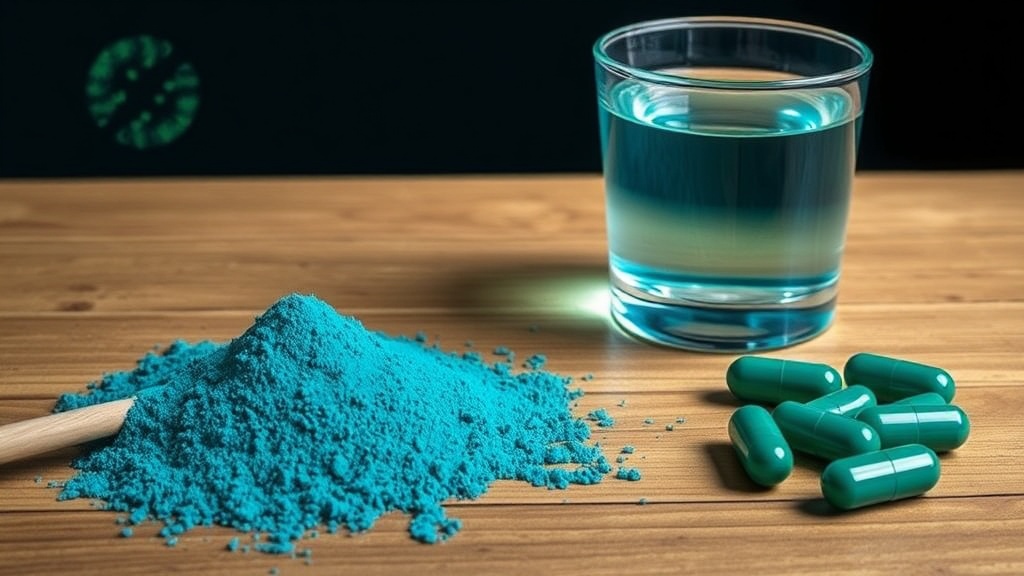
The most common form of spirulina is the dried powder, typically sold as whole-herb (unprocessed) or as a spray-dried product. Whole-herb powder contains the full spectrum of nutrients, including protein (55–70% by weight), phycocyanin, carotenoids, and minerals. Clinical trials often use doses of 1–8 g/day of powder (Karkos et al., 2011, PMID 21119617). For example, a study on allergic rhinitis used 2 g/day of spirulina powder (Cingi et al., 2008, PMID 18461249).
Extracts, such as phycocyanin-rich concentrates, are standardised to specific marker compounds. A typical extract ratio is 10:1 or 20:1, meaning 10–20 g of raw spirulina yields 1 g of extract. Doses for extracts are lower, often 200–500 mg/day. For instance, a study on antioxidant effects used 200 mg/day of a phycocyanin extract (Romay et al., 2003, PMID 12628535). Tinctures are less common and usually contain alcohol-extracted constituents; a typical dose is 1–2 mL three times daily, but standardisation is often lacking.
We advise readers that powder is the most cost-effective and well-studied form, but extracts may be preferable for targeted effects (e.g., anti-inflammatory) due to higher concentration of active compounds. Tinctures are best avoided unless from a reputable source with assayed phycocyanin content.
Goal-Specific Dosing
Dosing should align with the intended outcome. For general nutritional support, 1–3 g/day of powder is common. For antioxidant or anti-inflammatory goals, doses of 3–5 g/day have been used in trials (Mazokopakis et al., 2014, PMID 24456234). In a study on non-alcoholic fatty liver disease, 6 g/day of spirulina improved liver enzymes (Ferreira-Hermosillo et al., 2010, PMID 20652028).
For immune modulation, such as in allergic rhinitis, 2 g/day of powder was effective (Cingi et al., 2008). For blood lipid management, 4.5 g/day of spirulina reduced triglycerides and LDL cholesterol (Mazokopakis et al., 2014). For exercise performance, 3–6 g/day has been studied (Kalafati et al., 2010, PMID 20041975).
We note that higher doses (above 10 g/day) may cause gastrointestinal upset in some individuals. Starting with a lower dose (1 g/day) and increasing gradually over a week is a prudent approach.
Standardised vs Whole-Herb
Whole-herb spirulina powder is the traditional form, containing the full array of nutrients. However, variability in phycocyanin content (1–15% by weight) can affect potency. Standardised extracts guarantee a minimum percentage of phycocyanin (e.g., 10–20%) or other markers like total phenolics. For example, a product labelled "standardised to 15% phycocyanin" provides consistent dosing.
In our reading of the literature, standardised extracts are preferred for clinical studies where reproducibility is key. For general wellness, whole-herb is acceptable if sourced from a reputable producer that provides a certificate of analysis (COA) with phycocyanin content. We recommend readers look for products with a COA confirming phycocyanin ≥10% and absence of contaminants (heavy metals, microcystins).
Cycling Protocols
Some practitioners suggest cycling spirulina to prevent tolerance or accumulation of heavy metals. A common protocol is 5 days on, 2 days off, or 3 weeks on, 1 week off. However, there is limited clinical evidence supporting cycling. A study on spirulina for arsenic toxicity used continuous dosing for 16 weeks (Mazumder et al., 2011, PMID 21453001).
We advise that cycling may be unnecessary for high-quality spirulina with low heavy metal content. If using spirulina long-term, periodic breaks (e.g., one week off every two months) may be considered, but this is based on anecdotal reports rather than robust data.
Dosage and Quality Considerations
Quality directly impacts dosing. Contaminants such as microcystins (from co-harvested cyanobacteria) can cause liver toxicity. The European Food Safety Authority (EFSA) has set a tolerable daily intake for microcystins of 0.04 μg/kg body weight (EFSA, 2017). Therefore, spirulina should be tested for microcystins, especially if harvested from open waters.
Heavy metals (lead, mercury, arsenic) are another concern. The UK Food Standards Agency recommends limits of 3.0 mg/kg for lead and 0.1 mg/kg for cadmium in food supplements (FSA, 2021). We recommend readers choose spirulina from controlled cultivation (e.g., raceway ponds with clean water) and request a COA showing heavy metal levels below these thresholds.
Dosage forms also affect bioavailability. Powder mixed with water or juice is well absorbed. Tablets may have lower bioavailability due to compression. We suggest powder for optimal absorption.
Drug Interactions and Contraindications
Spirulina may interact with anticoagulant and antiplatelet medications due to its vitamin K content (approximately 25 μg per 3 g) and potential antiplatelet effects. A case report described increased INR in a patient on warfarin after consuming spirulina (Izzo et al., 2016, PMID 26857902). The mechanism is likely vitamin K antagonism of warfarin, though spirulina's antiplatelet activity may also contribute. We advise readers on warfarin to monitor INR closely and consult their prescriber.
Spirulina may also enhance the effects of immunosuppressants due to its immunostimulatory properties. In theory, it could reduce the efficacy of immunosuppressive drugs like cyclosporine. However, direct evidence is lacking. Patients with autoimmune conditions (e.g., multiple sclerosis, lupus) should exercise caution, as spirulina may stimulate immune activity.
Contraindications include phenylketonuria (due to phenylalanine content) and hyperuricemia (spirulina is high in nucleic acids, which can increase uric acid). Individuals with gout should limit intake.
Sourcing and Quality Markers
We recommend spirulina from controlled, closed-system cultivation (e.g., photobioreactors) to minimise contamination. Key quality markers include: phycocyanin content (≥10% by spectrophotometry), absence of microcystins (tested by ELISA or HPLC), heavy metals below FSA limits, and microbial counts within pharmacopoeial standards.
Look for third-party testing by organisations such as USP, NSF, or Eurofins. A COA should be available upon request. Avoid spirulina from unverified sources, especially wild-harvested from lakes with potential cyanotoxin blooms.
Frequently Asked Questions
What is the best time of day to take spirulina?
Spirulina can be taken at any time, but we suggest with meals to reduce gastrointestinal discomfort. Some users prefer morning intake for energy, though evidence is anecdotal.
Can spirulina be taken on an empty stomach?
It may cause nausea in some individuals. Starting with food is advisable.
How long does it take to see effects from spirulina?
In clinical trials, effects on lipids and inflammation were observed after 4–12 weeks of daily dosing.
Is spirulina safe during pregnancy?
Limited data exist. We recommend consulting a healthcare provider before use during pregnancy or lactation.
Can spirulina replace a multivitamin?
Spirulina provides some vitamins and minerals but is not a complete substitute. It is best used as a supplement, not a replacement.
What is the shelf life of spirulina powder?
Typically 2–3 years if stored in a cool, dry place away from light. Refrigeration may extend freshness.
Where to try it. If you want to source what we have described in this article, a no-filler Spirulina preparation is the option we point readers to. This site is published by Vitadefence Ltd; we disclose that here.